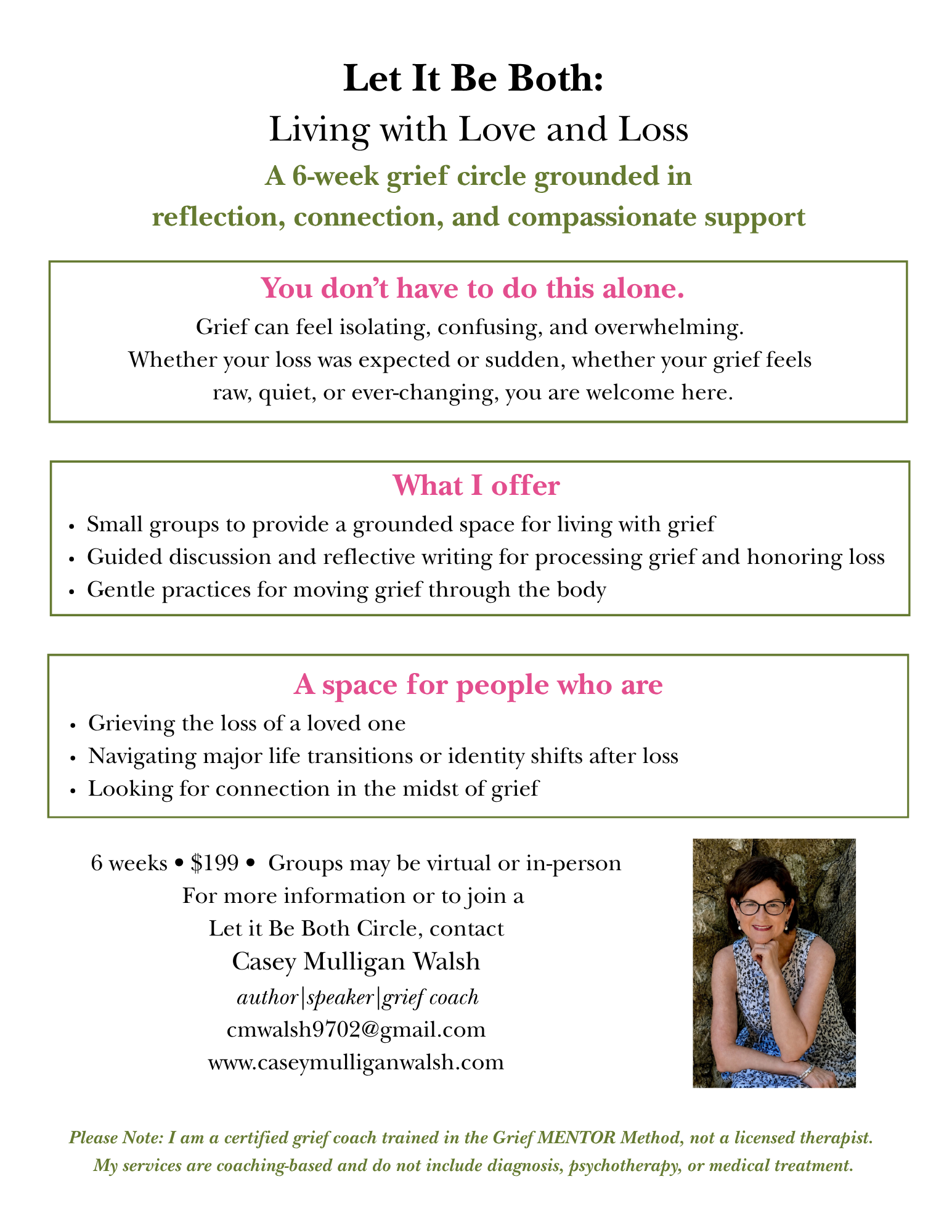

After a lifetime of loss (both parents before I reached 13, my only sibling at 20, then my eldest child when he was 20)—the story I tell in my memoir, The Full Catastrophe: All I Ever Wanted, Everything I Feared—I’m passionate about supporting others in their journey through grief.
Many of us were never given a language for grief, and so we’ve gone months or years or decades carrying it alone. Even when we’ve experienced loss ourselves and mean well, we often still come up short. We don’t know what to say or how to help, so we say the wrong thing, we say too little or, worse yet, we say nothing at all.
We also don’t talk much about the ongoing presence of grief in day-to-day life. Triggered by anniversaries, by music, by ordinary moments, grief often coexists with everyday living—and even, seemingly out of nowhere, joy.
Because we’ve had to face grief in a culture that’s largely grief-illiterate, we may feel as if we should be further along or question whether what we’re experiencing counts as grief, even years later.
Enter grief coaches.
As I spoke about my memoir to groups large and small, I began to notice one constant: questions about grief. Why do I still feel this way after all this time? Will I be sad/angry/lost forever? How do I move through this? What helps?
So in March 2026, I traveled to Tennessee to be trained as a grief coach, certified in Meghan Riordan Jarvis’s Grief M.E.N.T.O.R. Method, and subsequently completed additional online education in order to provide gentle, practical support that helps people navigate loss, build resilience, and create a meaningful life while carrying grief.
If this journey through grief resonates with you, if you’re drawn to a community who understands the need to be witnessed, who yearn to keep their loved one close and present, if you want to learn more about how to help grief move through your body in a way that’s healthy and enriching, I hope you’ll consider exploring a group that’s right for you.